Planning flatbed hire in Dundee
Dropside and flatbed hire suits jobs that a closed van handles badly: lengths of timber, fencing panels, pallets of blocks, pipe, a garden machine or a trade's worth of site kit. This page helps private customers, tradespeople and business users in Dundee choose a sensible category, understand the weight and licence questions, and plan loading so the job ends as calmly as it starts.
Nothing here confirms a particular vehicle, price, collection point or date. Every hire depends on the supplier's own terms and on the vehicle actually allocated to you, so treat each figure as a starting point for questions rather than a promise. The checklist further down gathers those questions in one place.
Start with the vehicle's emissions class and your route
In Dundee, the first practical question is not deck length but whether the particular vehicle you will drive suits your route. The city council states that its Low Emission Zone runs 24 hours a day, every day of the year, so an early start or a late return does not change the position. Plan timing around traffic and site hours, not around the zone.
The council lists Euro 6 as the standard for diesel vans and Euro 4 for petrol vans, with Euro VI for heavier goods vehicles. A category name such as 3 metre dropside tells you nothing about the engine. Ask for the registration of the allocated vehicle, check it against the council's current information and the signs on the day, and remember that a result for one registration says nothing about another truck or about any exemption.
Sources: Dundee Council: LEZ
Know the receiving address before planning the collection
Work backwards from where the load will be taken off. A driveway on a slope, a shared close, a building site with a narrow gate or a business unit with set delivery windows each change which vehicle makes sense. A shorter dropside may be easier to position; a lorry may carry everything in one trip but needs more room to stand and turn.
Health and safety guidance favours clear, level ground for loading and unloading, with the vehicle standing as stably as possible and arrangements agreed in advance. Before booking, ask the receiving site who will unload, with what equipment, and where the truck should stop. Permission to park or unload is a question for the landowner or the relevant authority, never something to assume from the vehicle's size or its emissions class.
Sources: HSE: safe loading and unloading
Collecting materials from Dryburgh Industrial Estate
Many Dundee trade and DIY jobs involve a builders' merchant run. Jewson lists a branch at 18 Faraday Street, Dryburgh Industrial Estate, Dundee, DD2 3QQ. That address is useful for route planning, but it does not tell you what stock is available, how the yard operates or whether a customer's hired vehicle will be loaded there.
Before collecting, phone the branch with the order details, overall lengths, pallet count and approximate weights, and ask how they load customer vehicles and where you should wait. Check the emissions position for the whole journey between the hire collection point, the merchant and your destination, not just one leg. If the yard cannot lift a pallet onto a tall deck, a tail-lift model or a different unloading plan may be needed.
Choosing between the dropside categories
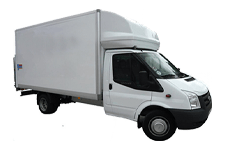
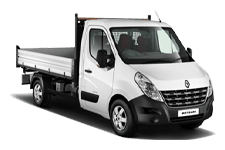
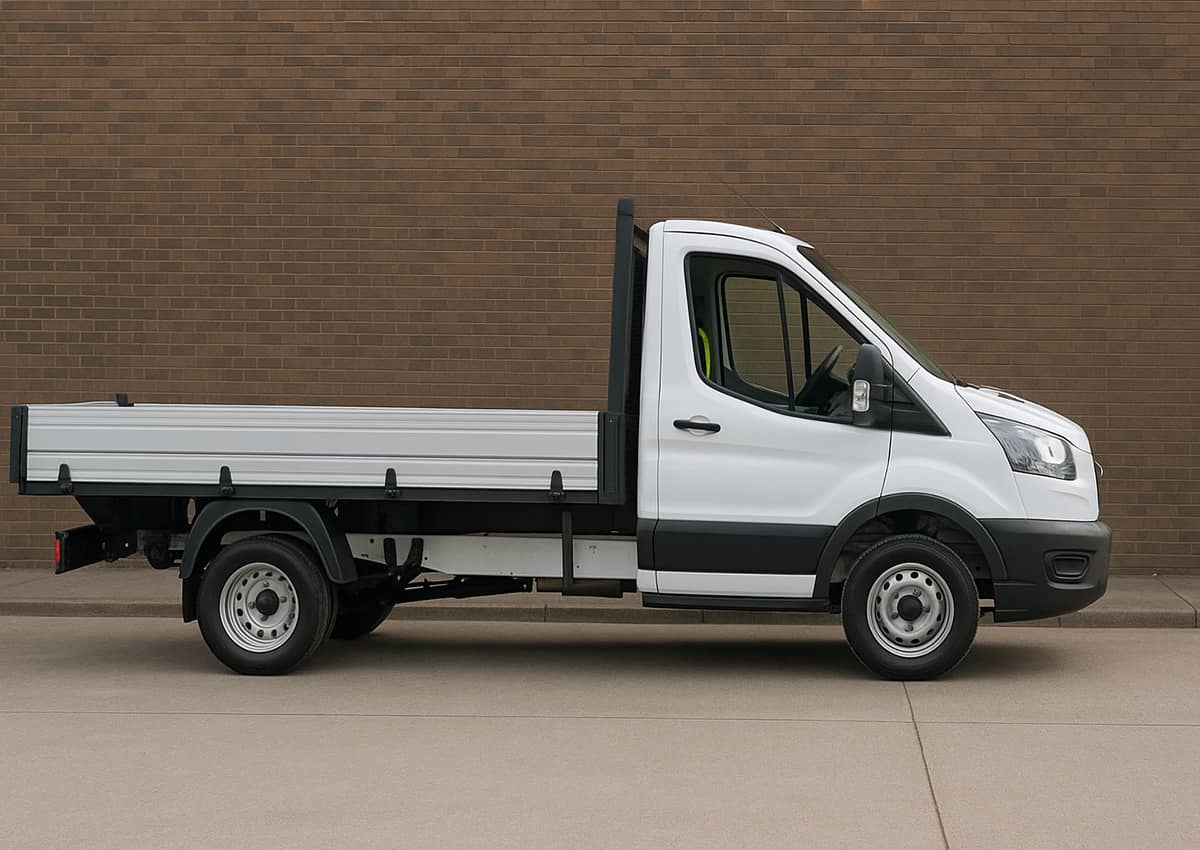
A 3 metre dropside suits boards, fencing, bagged materials and tools where manoeuvrability matters. A 4 metre deck gives more room for long timber and pipe and a better chance of carrying lengths without overhang. The dropside with tail lift is worth discussing for pallets and wheeled equipment where there is no dock or forklift at either end.
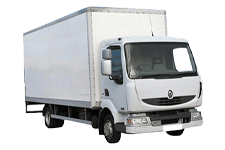
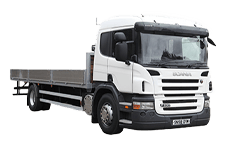
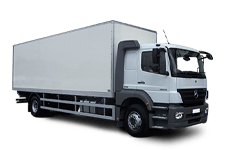
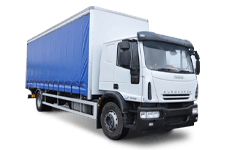
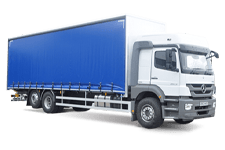
The 7.5 tonne dropside lorry offers a much larger deck for scaffold tube, several pallets or bigger machinery, but it brings licence, possible operator and route questions. Published bed lengths and payloads are representative of each category. Ask for the allocated vehicle's actual bed dimensions, side heights and payload before you commit an order to fit it.
Sources: Nationwide Hire UK: 3 metre dropside, Nationwide Hire UK: 4 metre dropside, Nationwide Hire UK: dropside with tail lift, Nationwide Hire UK: 7.5 tonne dropside
Gross weight, payload and loading equipment are three different numbers
Gross vehicle weight, also called maximum authorised mass, is the most the loaded vehicle may weigh, and it is normally shown on the plate or sticker. Payload is what remains once the vehicle itself, fuel, driver and passengers are counted. A 3.5 tonne van does not carry 3.5 tonnes of goods, and a published payload figure can differ from the unit you receive.
Loading equipment has its own rating. A tail lift rated for a certain weight does not increase payload, and a pallet within the lift rating may still overload the truck when combined with the rest of the load. Add up pallets, packaging and every item, spread the weight across the axles, recheck after each drop, and use a weighbridge when you are unsure.
Sources: GOV.UK: vehicle weights explained, DVSA: HGV overloading basics, Nationwide Hire UK: dropside with tail lift
Licence entitlement and conditions of hire
A standard category B car licence generally covers vehicles up to 3.5 tonnes maximum authorised mass, which includes most dropside vans. Above 3.5 tonnes and up to 7.5 tonnes, category C1 is normally required. The figure that matters is the plated weight of the vehicle allocated, not the category label, so check each driver's licence against that plate.
Hire suppliers usually set their own age, experience, deposit, insurance and mileage conditions, and commercial use of a lorry may carry extra requirements. The open deck is a real benefit for awkward loads, but it comes with a condition: the hirer is responsible for what goes on it and how it is held. Read the supplier's confirmed terms and booking documents rather than relying on any general description.
Sources: GOV.UK: driving licence categories, Third-party reference: Nationwide Hire UK terms and conditions
Securing the load on an open deck
An open body is only as safe as its restraint. National guidance is clear that a load must never rely on its own weight or friction to stay put, and the securing method has to suit both the load and the vehicle. Check the deck, headboard, drop sides and anchorage points before loading, and use rated straps or chains on proper attachment points, not on sheeting or rope hooks.
Ask whether straps, chocks or friction matting come with the hire; do not assume they do. Place heavier items low and forward against the headboard, keep the load within the sides where possible, and recheck tension after the first few miles. If anything projects beyond the rear or sides, measure it and read the current official guidance on overhanging loads, which sets marking and notice requirements depending on the projection.
Sources: DVSA: securing loads on HGVs and goods vehicles, DVSA: load securing basics, DVSA: ways to secure a load, DVSA and DfT: overhanging loads on vehicles
Side loading and unloading without surprises
Dropping a side gives easy access for a forklift or hand loading, but it also releases anything leaning against it. Before lowering a side, check that nothing has shifted in transit, stand clear of the fall line and keep other people, especially children and passers-by, away from the working area.
Unload on firm, level ground with the handbrake on and the engine off. Remove restraints one at a time, working from the side that keeps the remaining load stable. Tail lifts need the manufacturer's instructions, a clear platform and nobody underneath. If the receiving site has no suitable equipment, agree a plan before the truck arrives, not once it is parked at the kerb.
Sources: HSE: safe loading and unloading, DVSA: securing loads on HGVs and goods vehicles